
Four airlines sign MoU for Japan-Europe cargo
Lufthansa Cargo, SWISS WorldCargo, ANA, and Nippon Cargo Airlines sign a new Memorandum of Understanding to expand cargo services between Japan and Europe.
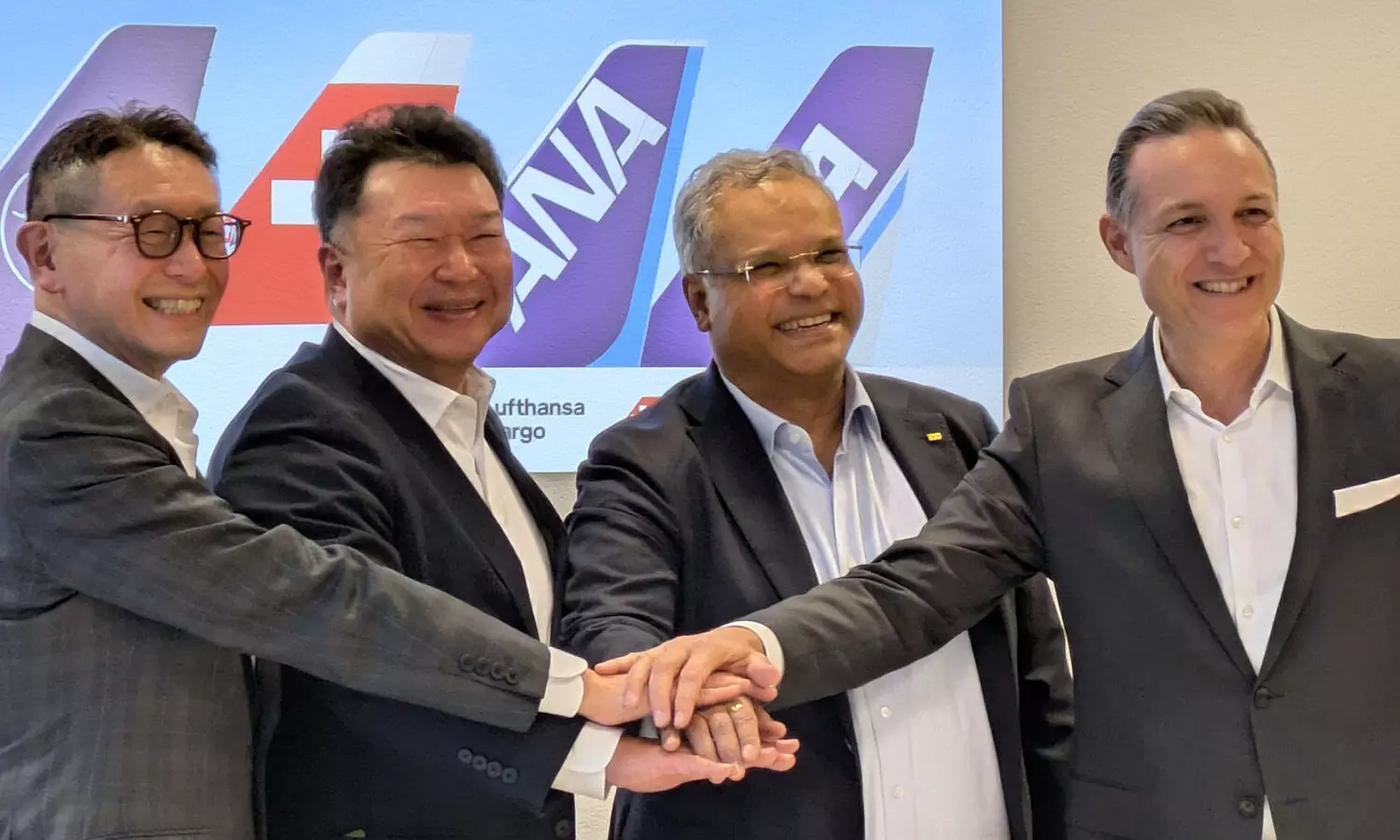
Hiroyuki Homma, Kenichi Wakiya, Ashwin Bhat, and Alain Chisari
Four major aviation players, namely Lufthansa Cargo, SWISS WorldCargo, All Nippon Airways, and Nippon Cargo Airlines, formalised their intention to dramatically broaden air freight operations between Japan and Europe. Through the signing of a Memorandum of Understanding (MoU), the consortium intends to provide a robust framework that explores greater network integration, promising shippers unprecedented flexibility and capacity in an increasingly demanding global logistics landscape. For the readers of the STAT Trade Times, this development signals a monumental shift in intercontinental trade corridors, underscoring the critical need for seamless air transport.
The newly signed MoU is fundamentally anchored in the historical ties shared by Lufthansa Cargo and ANA. Back in 2014, the two aviation heavyweights successfully launched a highly integrated cargo joint venture that served as a vital bridge for the Japan-Europe trade lane. The initiative allowed for streamlined operations, harmonised processes, and shared capacities that greatly benefitted both the European and Asian markets. However, the partnership experienced a hiatus when the cooperation was officially suspended in September 2023, following essential restructuring activities within ANA Holdings’ cargo business division. Now, building upon the robust bedrock established over the previous decade, the airlines are embarking on a revitalised phase of strategic dialogue.
Crucially, this renewed phase of negotiations is not merely a reinstatement of the past alliance, but rather a significant and ambitious expansion. The potential resumption of their cargo joint venture will now ambitiously include SWISS WorldCargo and Nippon Cargo Airlines. By bringing these two formidable carriers into the fold, the initiative aims to actively assess the multifaceted areas of collaboration. The airlines will thoroughly evaluate how their complementary route networks and specialised cargo capabilities could generate amplified value for their broad spectrum of international customers, thereby strengthening the vital trade corridors connecting European hubs with Japanese gateways.
In joining forces for greater connectivity, the quartet of carriers is meticulously assessing the myriad opportunities to deliver added value to the supply chain. The primary focus of the ongoing discussions heavily revolves around engineering greater network connectivity between the two economic powerhouses of Japan and Europe. Shippers, freight forwarders, and logistics providers stand to gain immensely from additional routing alternatives and enhanced capacity options. Furthermore, the cooperation is intricately designed to offer customers enhanced flexibility and a wider array of service choices tailored to modern logistical demands.
Emphasising the strategic importance of this development, Ashwin Bhat, CEO of Lufthansa Cargo, underscored the enduring nature of the partnership.
“Japan is an important market for Lufthansa Cargo, and our long-standing relationship with All Nippon Airways has enabled us to serve customers reliably for many years. Together with SWISS WorldCargo and Nippon Cargo Airlines, we now want to explore how we can leverage our respective brand strengths, networks and expertise to create even greater value for our customers. By offering even more options and flexibility between Japan and Europe, we are further delivering on our mission of Enabling Global Business,” says Ashwin Bhat, CEO of Lufthansa Cargo.
Highlighting the critical nature of the specific cargo commodities transported across these routes, Alain Chisari, Head of SWISS WorldCargo, noted the combined operational synergies.
“Europe and Japan are both key markets for customers that rely on trustworthy, high-quality air cargo services for care-intensive and time-critical shipments. Bringing together our strong European network and specialized cargo expertise with the capabilities of our partners could provide customers with an even broader range of transport solutions,” says Alain Chisari, Head of SWISS WorldCargo.
Echoing these sentiments from the Japanese perspective, the leadership at All Nippon Airways articulated their readiness to adapt to the evolving demands of the global supply chain sector.
“All Nippon Airways and Lufthansa Cargo have built a strong foundation over many years. We are pleased to renew our dialogue and broaden our cargo joint venture to include Swiss WorldCargo and Nippon Cargo Airlines. By bringing together the individual strengths of all four carriers, we aim to respond even more effectively to the diverse logistics needs of customers in Japan and Europe,” says Kenichi Wakiya, Executive Vice President, Cargo Marketing & Services, All Nippon Airways & CEO, ANA Cargo.
Finally, the inclusion of dedicated freighter expertise brings another layer of operational robustness to the proposed alliance.
“Nippon Cargo Airlines leverages extensive experience in dedicated freighter operations and a strong presence in the Japan-Europe cargo market as we join forces with our partners. We are fully committed to complementing the networks, aiming to provide customers with expanded capacity and flexible routing solutions,” says Hiroyuki Homma, President & Chief Executive Officer, Nippon Cargo Airlines.
As the four carriers progress with their evaluations, the international air cargo community will be watching closely. A successful integration of this scale promises to reshape the logistical landscape between Europe and Japan, ultimately setting a new industry standard for collaborative air transport solutions. This strategic alignment underscores the importance of resilience and adaptability in international logistics, ensuring that global supply chains remain robust amidst an ever-changing economic environment.